A dry cleaning solvent for upholstery is a water-free cleaning solution used to remove dirt, oils, and stains from fabrics that would shrink, bleed, or stain if exposed to water. It is most often required for silk, velvet, certain rayons, and any upholstery labeled with an “S” cleaning code.
If you have checked the cleaning tag on your couch and seen instructions mentioning a dry cleaning solvent, you may have wondered what that means. Many homeowners across Manhattan and NYC assume all furniture can be cleaned with water-based methods, but certain fabrics require a completely different approach. This guide explains what a dry cleaning solvent is, which fabrics need it, how the upholstery codes work, and when professional cleaning is the safer choice.
What is a dry cleaning solvent for upholstery?
A dry cleaning solvent is a water-free cleaning agent designed to dissolve dirt, oils, and stains without saturating the fabric. Despite the name, the process is not completely dry, but moisture levels are far lower than those of steam cleaning or hot water extraction.
Why solvents exist in the first place:
- Some fabrics are water-sensitive: Excess moisture damages delicate materials.
- Certain dyes bleed: exposure to water can cause color transfer or staining.
- Shrinkage is a real risk: Natural fibers shrink when cleaned with too much water.
- Drying is faster: Low-moisture cleaning significantly shortens drying time.
Upholstery cleaning codes on furniture tags identify which method is safe for the fabric.
Which upholstery fabrics require dry cleaning solvents?
Most fabrics that carry an “S” code need solvent-based cleaning. These are typically delicate natural fibers or specialty materials that water can damage. Common examples include:
- Silk upholstery: Delicate fibers that water can stain or distort.
- Velvet furniture: Sensitive pile that loses texture if oversaturated.
- Certain rayons and linens: Prone to shrinkage and water rings.
- Damask and brocade: Decorative weaves that need low-moisture care.
- Vintage or antique pieces: Older fabrics often require extra caution.
- Specialty designer fabrics: Manufacturer instructions may require solvent treatment.
Using a water-based method on an S-code fabric can cause permanent damage, including browning, water rings, and shrinkage.
What do upholstery cleaning codes mean?
Upholstery cleaning codes are letters printed on furniture tags that tell you which cleaning method is safe. There are four standard codes:
- W: Water-based cleaners only. Safe for most synthetic fabrics, such as polyester, nylon, and many cotton blends.
- S: Solvent-based cleaners only. Do not use water or steam. Common on silk, velvet, and certain rayons.
- WS (or W/S): Both water-based and solvent-based methods are acceptable. Start with the gentler option.
- X: Vacuum or light brushing only. No liquid cleaners of any kind.
A fifth code, D, sometimes appears and means “dry clean only” by a professional.
Ignoring these codes is one of the most common causes of upholstery damage. Always check the tag before applying any product.
How does dry cleaning solvent work?
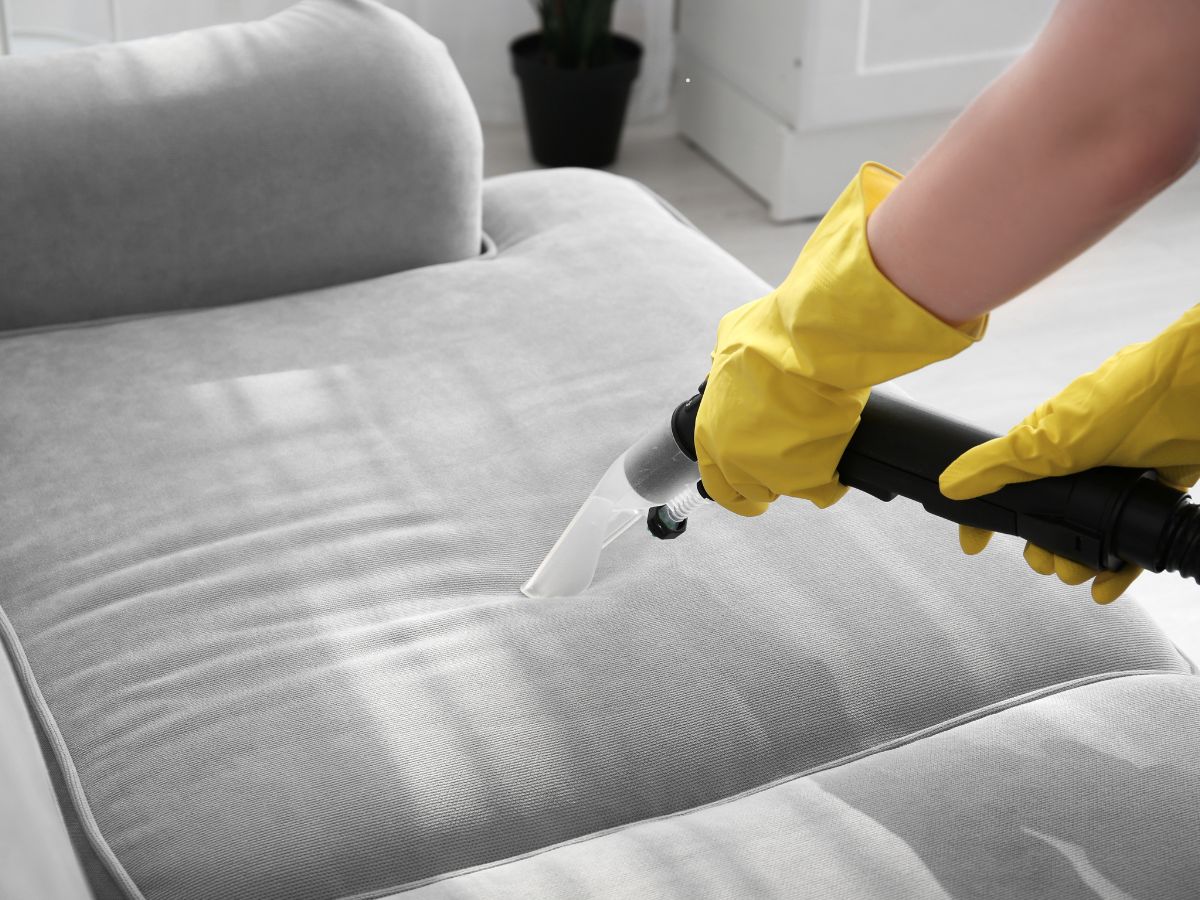
Solvent cleaning uses a water-free product to dissolve oils, dirt, and stains while keeping the fabric dry. Professional cleaners apply the solvent with controlled techniques to lift contaminants without saturating the fibers.
What solvent cleaning typically removes:
- Body oils that build up in the fabric over time
- Grease-based food stains that respond poorly to water
- Surface dirt that dulls the upholstery’s appearance
- Light odor-causing contamination trapped in the fibers
- Every day, grime that vacuuming cannot reach
- A properly selected Cleaning Method Remove Allergens can also help reduce allergen-containing particles trapped within upholstery fibers.
The right solvent depends on the fabric, the stain, and the manufacturer’s recommendations. In some situations, professionals may also recommend specialized treatments such as mold removal from furniture before upholstery cleaning if microbial growth has affected the piece.
Is dry cleaning solvent better than steam cleaning?
Neither method is universally better. The right choice depends on the fabric. Steam cleaning offers deeper extraction and stronger overall cleaning for durable fabrics, while solvent cleaning protects delicate materials that water would damage.
Steam cleaning works best for:
- Durable synthetic fabrics that tolerate moisture well
- Heavy soil buildup that needs deep water-based extraction
- Deep odor removal from cushions and lower fibers
- Allergen reduction in W-code upholstery
Solvent cleaning works best for:
- Water-sensitive fabrics like silk, velvet, and certain rayons
- Specialty or designer materials with manufacturer-specific instructions
- Situations needing faster drying with minimal moisture exposure
Professional assessment determines which method is safest before cleaning begins.
Can homeowners use dry cleaning solvents themselves?
Yes, but with significant risk. Consumer solvent products are available, but DIY cleaning without proper fabric knowledge often causes damage. Possible problems include discoloration, permanent staining, fiber damage, changes in texture, and strong chemical odors.
Common DIY mistakes with solvent cleaning:
- Skipping a fabric test: Some materials react unpredictably to cleaning agents.
- Using too much product: Excess solvent leaves residue that attracts dirt.
- Ignoring the manufacturer code: Wrong method, wrong outcome.
- Aggressive scrubbing: Excess rubbing damages delicate fibers.
For antique furniture, designer fabrics, and S-code upholstery, professional cleaning is almost always the safer choice.
Why professional upholstery cleaning matters
Professional upholstery cleaning starts with evaluation, not application, which is why many homeowners choose a trusted local cleaning company Brooklyn residents can rely on. Experienced technicians inspect the fabric composition, cleaning code, stain conditions, and moisture sensitivity before choosing a method. At Vapor Cleaning Pros, we select cleaning methods based on each fabric’s specific needs to protect furniture while delivering effective results. Understanding the deep upholstery cleaning benefits can also help homeowners see why professional treatment is more effective than relying on routine vacuuming or surface cleaning alone.
Professional cleaning typically delivers:
- Better stain management: Methods are matched to stain type and fabric requirements.
- Improved appearance: Deep cleaning removes residue that dulls upholstery.
- Safer treatment for delicate materials: Specialized methods reduce the risk of damage.
- Better odor control: Removing contamination at the source improves freshness, one of the key benefits of upholstery cleaning.
- Longer furniture lifespan: Routine maintenance preserves upholstery quality.
The result is peace of mind, especially with valuable or sentimental furniture.
How often should upholstery be professionally cleaned?
Most upholstery professionals recommend deep cleaning every 12 to 24 months for average household use. Homes with pets, children, or heavy daily use often benefit from cleaning every 6 to 12 months. Scheduling professional upholstery care as part of your pre-holiday home cleaning routine is also a smart way to refresh your furniture before hosting family gatherings or seasonal celebrations.
Signs your upholstery is due for cleaning:
- Visible stains that resist surface cleaning may indicate the need for professional upholstery stain removal.
- Dull or discolored fabric from gradual buildup
- Lingering odors that signal trapped contamination
- More allergy symptoms indoors than usual
- Furniture that feels less fresh even after vacuuming
Consistent upholstery maintenance keeps furniture looking and feeling its best for longer.
Ready to protect your upholstery the right way?
Understanding what a dry cleaning solvent for upholstery is helps you make smarter decisions about furniture care. Some fabrics need solvent-based cleaning, others respond best to steam extraction, and a few should never see liquid at all. The key is matching the method to the material. If your furniture needs professional care, now is a good time to get a quote or book cleaning with experienced NYC upholstery cleaners who handle delicate fabrics safely.
Frequently Asked Questions
What is a dry cleaning solvent for upholstery?
A water-free cleaning solution is used to clean upholstery fabrics that would be damaged by water exposure. It is most often used on S-code fabrics like silk and velvet.
What does an "S" code on upholstery mean?
The S code means the fabric must be cleaned with solvent-based products only. Water and steam can cause browning, water rings, or shrinkage on S-code fabrics.
Is dry cleaning solvent safe for all upholstery fabrics?
No. Solvents are designed for specific fabrics. Always check the cleaning code before applying any product, and avoid using solvents on W-only fabrics or X-code furniture.


