Upholstery cleaning removes dust, allergens, body oils, pet dander, and bacteria trapped deep in furniture fibers. Regular professional cleaning improves indoor air quality, reduces odors, and extends the life of your couch or chairs. If you’re looking for Professional Cleaning Services West Village, routine upholstery cleaning is an essential part of maintaining a healthier home. This upholstery textile guide also explains how proper care helps preserve different fabric types and improve their longevity.
Your couch and chairs are some of the most-used items in your home, yet often the most overlooked when it comes to cleaning. Vacuuming and dusting handle the surface, but most contaminants settle deep in the fibers where everyday tools cannot reach. This guide covers why upholstery cleaning matters, how often to do it, and what professional services include.
What happens when upholstery is not cleaned regularly?
Upholstery acts like a filter inside your home. Fabric fibers trap dust, body oils, food particles, allergens, and pet dander every day. Most of that buildup settles below the surface, where regular vacuuming cannot fully reach it. Over time, accumulated upholstery allergens can contribute to poorer indoor air quality and make the furniture less comfortable for sensitive household members.
Neglected furniture typically shows these signs over time:
- Unpleasant odors that linger even after cleaning the surface
- Dull or worn appearance as dirt buildup affects color and texture
- More allergy symptoms when dust and dander become airborne
- Lost softness as fibers compact under embedded debris
- Faster fabric deterioration from abrasive soil particles
Common sources of buildup include daily skin contact, pet hair and oils, food and drink spills, and airborne dust that settles even when the room looks clean.
How does upholstery cleaning improve indoor air quality?
Dirty upholstery releases dust, allergens, and pet dander into the air every time someone sits down or shifts a cushion. Professional upholstery cleaning removes those contaminants so they no longer circulate through the room.
This matters most for households with allergies, asthma, or pets. The EPA notes that soft furnishings can harbor dust mites, pet dander, and other biological pollutants, and that regular cleaning helps reduce their levels. Specifically, professional upholstery cleaning:
- Removes trapped allergens like dust, pollen, and pet dander
- Reduces airborne particles that recirculate when furniture is used
- Controls odors by removing bacteria and residue
- Supports healthier indoor air by cutting overall contaminant load
Household vacuuming reaches the surface; deep extraction reaches the layers underneath.
Does upholstery cleaning help furniture last longer?
Yes. Dirt particles are abrasive, and as people sit and shift, those particles grind against fabric fibers like sandpaper. Removing them slows wear and protects the upholstery’s appearance. Understanding the long-term upholstery cleaning benefits can help homeowners see professional cleaning as routine furniture care rather than simply a cosmetic service.
Routine cleaning helps in four ways:
- Removes abrasive dirt that cuts into fibers with daily use
- Preserves texture so cushions stay softer for longer
- Maintains color by clearing buildup that dulls the fabric
- Supports durability by reducing stress on the upholstery overall
Furniture is a meaningful investment, and routine care protects that investment over the years.
Why do upholstery odors develop over time?
Even a clean-looking couch can hold odors deep in the fabric. Upholstery absorbs moisture, body oils, food particles, and pet residue, and bacteria interact with that buildup to release smells.
Common sources of upholstery odors:
- Pet dander and oils: Pets leave behind natural oils and odor-causing residue
- Food and beverage spills: Small spills settle below the visible surface
- Body oils and sweat: Daily use builds up gradually
- Moisture and humidity: Damp conditions encourage musty smells
Professional cleaning removes the contamination causing the odor, rather than masking it with fragrance.
How does professional upholstery cleaning work?
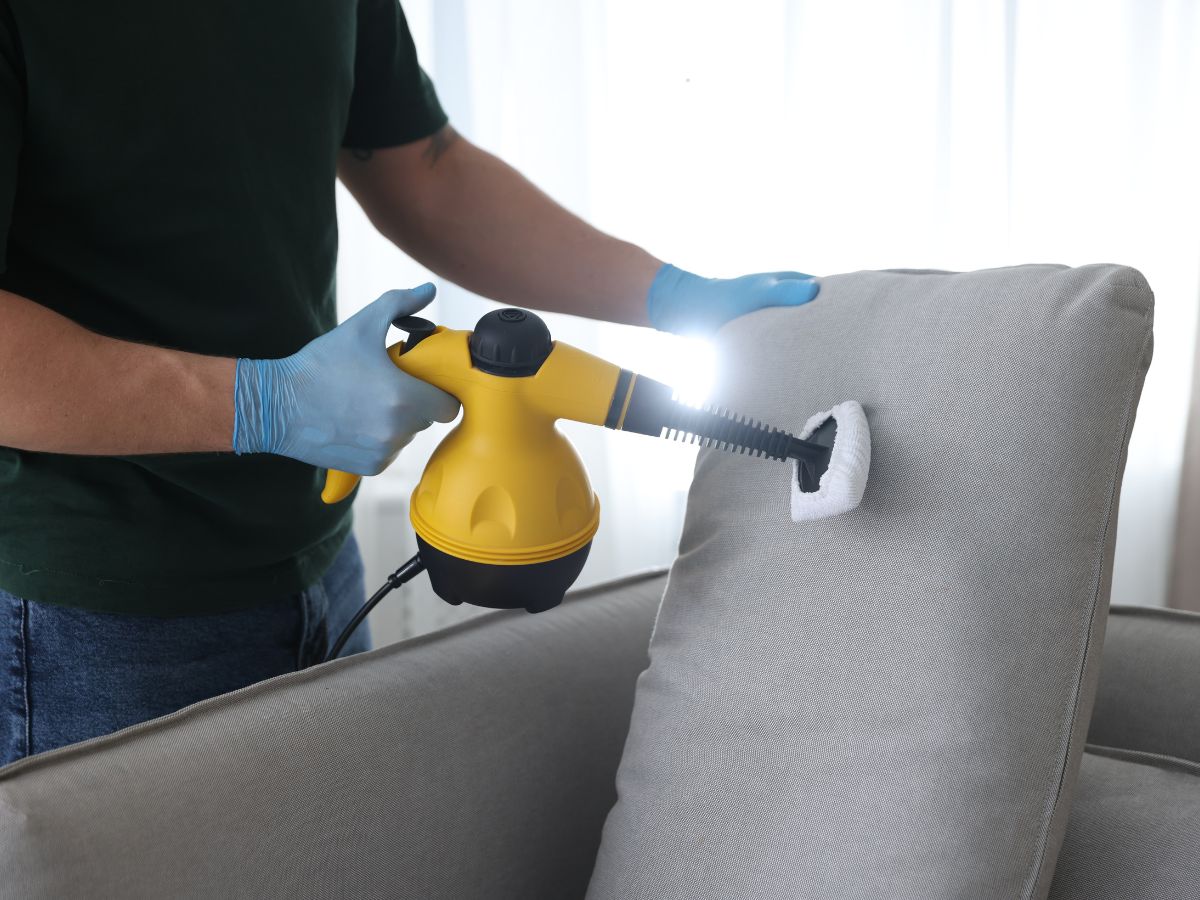
Professional upholstery cleaning uses deep-extraction methods to lift dirt, allergens, and bacteria from below the fabric surface. At Vapor Cleaning Pros, the process is designed to clean deeply while protecting delicate fabrics and limiting excess moisture.
Professional cleaning typically delivers:
- Better stain reduction: Extraction targets residue trapped below the surface
- Improved appearance: Embedded dirt that dulls the fabric is cleared
- Better odor control: Deep cleaning removes contamination at the source
- Faster drying: Strong extraction removes moisture more efficiently than household machines
- Safer care for delicate fabrics: Specialized methods protect sensitive materials
The goal is both cleanliness and long-term fabric protection.
Does upholstery material affect cleaning needs?
Yes. Different fabrics respond differently to moisture and cleaning agents, and the wrong method can damage upholstery or shorten its lifespan. Many sofas carry care codes (W, S, WS, X, or D) that indicate the correct approach.
How common upholstery fabrics respond to cleaning:
- Microfiber: Responds well to extraction cleaning and dries quickly
- Cotton: Needs balanced moisture to prevent shrinking or discoloration
- Linen: Delicate fibers benefit from gentler techniques
- Velvet: Sensitive texture requires specialized care
- Specialty fabrics: May need customized methods to avoid damage
Professional inspection identifies the safest process for each piece.
How often should upholstery be professionally cleaned?
Most upholstery professionals recommend deep cleaning every 12 to 24 months for average household use. Homes with pets, children, or heavy daily use often benefit from cleaning every 6 to 12 months.
Signs your upholstery is due for a cleaning:
- Lingering odors that stay after surface cleaning
- Dull or discolored fabric from gradual buildup
- More allergy symptoms indoors than usual
- Harder-to-remove stains that have settled deeper
- Rough or sticky texture from residue
Routine maintenance is far easier and more affordable than restoring heavily neglected furniture later.
Why is professional cleaning better than DIY?
DIY upholstery cleaning with rental machines or household sprays may improve the surface, but it rarely removes deep contamination. Many homeowners also overlook the drawbacks of DIY upholstery cleaning, including excess moisture, soap residue, fabric discoloration, longer drying times, and lingering odors.
Professional cleaning uses stronger extraction and fabric-specific techniques that reduce these risks while reaching the layers DIY methods miss. For delicate fabrics, professional care is often the only safe option.
Ready to protect your furniture and indoor air?
Upholstery cleaning is about more than appearance. It supports indoor air quality, reduces odors, and protects furniture from premature wear. Whether you have a busy family home, pets, or simply want to maintain a furniture investment, routine professional cleaning makes a noticeable difference. If your couch or chairs look dull, hold odors, or seem to trigger allergies, now is a good time to get a quote or book a cleaning with experienced NYC upholstery professionals.
Frequently Asked Questions
Why is upholstery cleaning important?
How often should upholstery be professionally cleaned?
Every 12 to 24 months for average homes, and every 6 to 12 months for homes with pets, children, or heavy daily use.
Can upholstery cleaning improve indoor air quality?
Yes. Professional cleaning reduces dust, allergens, and pet dander trapped in fibers that would otherwise circulate when furniture is used.
Does upholstery cleaning help furniture last longer?
Yes. Removing abrasive dirt particles reduces wear on the fibers and helps extend the life of the upholstery.
Is professional upholstery cleaning better than DIY?
Professional cleaning delivers deeper results, better moisture control, faster drying, and safer treatment for delicate fabrics than rental machines or household sprays.


