Spotting mold on your couch or armchair is unsettling, and the instinct to grab the nearest cleaning product and scrub it away is understandable. But here is the reality: mold on upholstery is not just a surface issue, and treating it incorrectly can spread spores, damage the fabric, or leave the root cause completely untouched. Many DIY upholstery mistakes, such as using excessive water or the wrong cleaning products, can make the problem even worse. If you want to actually remove mold from upholstery and keep it from coming back, the process requires the right steps in the right order. This guide covers what causes mold on furniture, how to treat it safely, and when the job genuinely calls for professional help.
Why Mold Grows on Upholstery
Mold needs three things to grow: moisture, warmth, and an organic surface to feed on. Upholstery fabric provides all three, especially in apartments and homes where humidity levels run high. Different types of upholstery fabric can vary in how easily they absorb moisture and support mold growth. Common causes include:
- Furniture placed against exterior walls that collect condensation
- Rooms with poor ventilation or limited airflow
- Spills that were not fully dried after cleaning
- Upholstery that was overwetted during DIY cleaning and did not dry thoroughly
- Humid climates or summer months, where indoor moisture builds up
Once mold takes hold in fabric fibers, it can spread quickly if left untreated. The earlier it is caught, the easier and safer the removal process. Homeowners who regularly schedule Couch Stain Removal Staten Island services often reduce the risk of moisture-related upholstery problems before mold has a chance to develop.
Safety First: What to Do Before You Start
Mold releases spores when disturbed. Before touching the affected furniture, take a few precautions to protect yourself and the rest of your home.
- Open windows to ventilate the room before starting
- Wear gloves and a face mask rated for mold spores
- Move the furniture away from walls or other surfaces if possible
- Avoid using a dry brush on the mold, which can release spores into the air
- Do not use a vacuum without a HEPA filter, as standard vacuums spread spores through the exhaust
These steps matter more than most people realize and they take less than five minutes to follow.
How to Remove Mold From Upholstery Step by Step
Step 1: Take the Furniture Outside If Possible
Working outdoors prevents spores from spreading through your living space. If the furniture cannot be moved, open all windows and doors to maximize airflow.
Step 2: Brush Away Surface Mold
Use a stiff-bristle brush to remove loose surface mold from the fabric. Do this gently and dispose of the debris in a sealed bag immediately. Do not let it fall onto the carpet or other surfaces.
Step 3: Apply a Mold-Killing Solution
Several options work effectively on fabric upholstery:
- White vinegar: Apply undiluted to the affected area, let it sit for 10 minutes, then blot with a clean cloth. Vinegar is effective against many mold species and safe for most fabric types.
- Rubbing alcohol: Mix equal parts rubbing alcohol and water, apply to the area, and blot dry. Works well on synthetic fabrics.
- Baking soda paste: Mix baking soda with a small amount of water and apply to the area. Let it dry completely, then brush it away. Effective for absorbing moisture and neutralizing odors.
Avoid bleach on colored or delicate upholstery fabrics, as it causes permanent discoloration.
Step 4: Let It Dry Completely
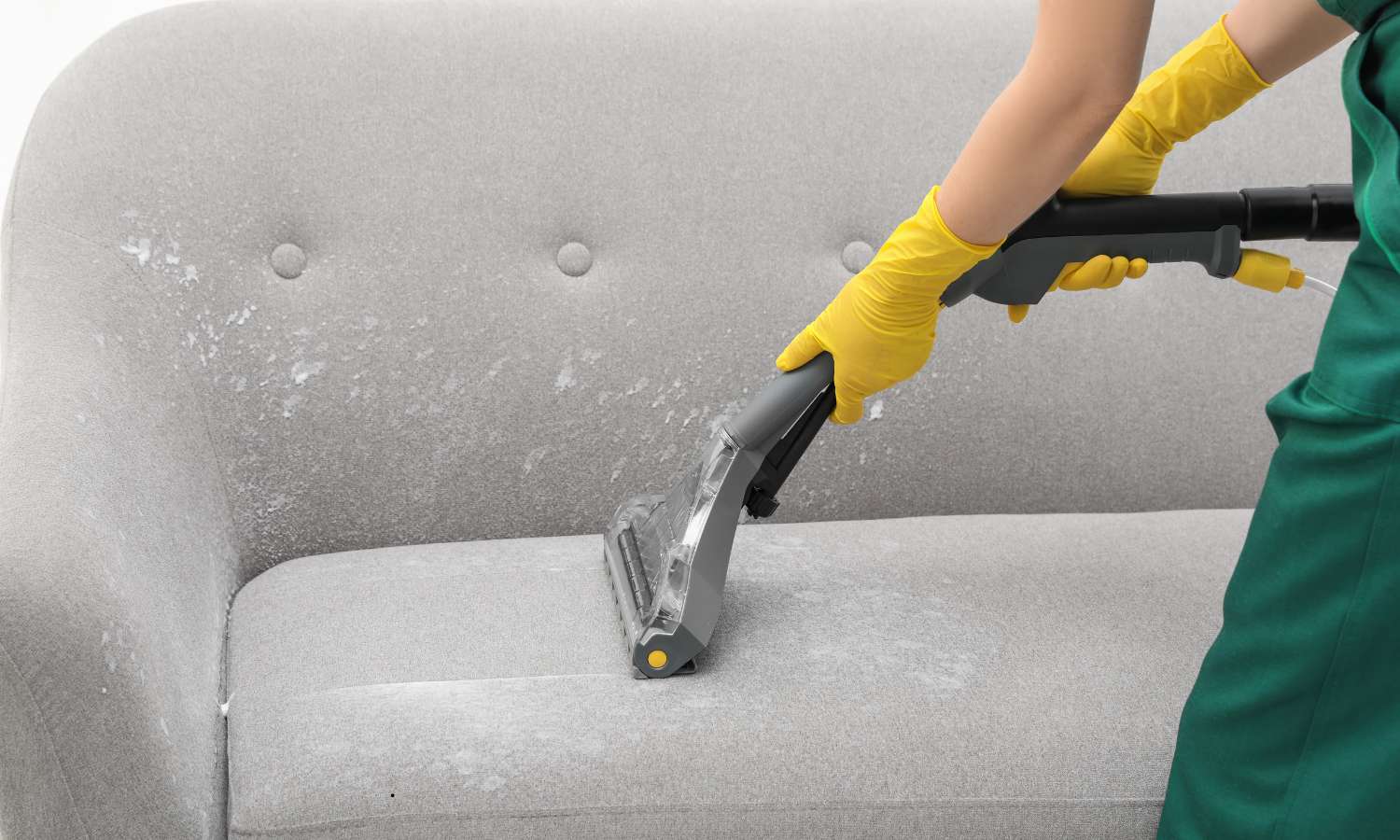
This is the most critical step. Incomplete drying is what caused the mold in the first place. Use a fan, open windows, and give the fabric ample time before returning the furniture to its original position. For deeper moisture removal, steam cleaning upholstery fabrics should only be considered after confirming the material is steam-safe and the upholstery can be dried thoroughly to prevent mold from returning.
Step 5: Treat for Odor
Even after mold is removed, a musty smell often lingers in the fibers. Sprinkling baking soda over the surface, leaving it for several hours, and then vacuuming it away helps neutralize residual odor effectively.
Fabrics That Need Extra Care
Not all upholstery can handle the same mold treatments. Some materials require a gentler approach.
- Velvet and silk: Avoid water-based solutions entirely. These fabrics require professional treatment to prevent permanent damage to their texture.
- Linen and cotton: Use minimal moisture and dry quickly to prevent further mold growth
- Leather: Never use vinegar or alcohol on leather. Use a leather-safe mold remover and condition the surface afterward.
When the fabric type makes home treatment risky, professional upholstery cleaning in NYC is the safer path forward.
When to Call a Professional
Some mold situations go beyond what DIY methods can resolve safely.
- The mold covers a large area of the furniture
- The odor persists after multiple cleaning attempts
- The fabric is delicate, valuable, or hard to identify
- Mold has likely penetrated into the padding or frame beneath the fabric
Vapor Cleaning Pros handles mold-affected upholstery with professional steam extraction that reaches beyond the surface fabric and into the layers where mold can hide. Clients across Manhattan and Brooklyn trust the team for couch cleaning in Queens and upholstery restoration that addresses the full problem, not just what is visible.
Conclusion
Removing mold from upholstery is absolutely doable when you follow the right steps and use appropriate products for the fabric type. The key is to act quickly, dry thoroughly, and not cut corners on ventilation. For larger infestations, delicate fabrics, or persistent odors, professional cleaning is the most reliable solution.
Do not let mold take over your furniture. Reach out to Vapor Cleaning Pros for a professional upholstery assessment and a deep clean that actually addresses the root cause.
Frequently Asked Questions
Can mold on upholstery make you sick?
Yes. Mold releases spores that can trigger allergic reactions, respiratory irritation, and other health issues, particularly for people with asthma or weakened immune systems. Promptly treating mold on furniture is important for indoor air quality.
Does white vinegar kill mold on fabric?
White vinegar is effective against many common mold species and is generally safe for most upholstery fabrics. Apply it undiluted, let it sit for 10 minutes, and blot dry. It will not bleach or damage most fabric colors.
How do I stop mold from coming back on my couch?
Reduce indoor humidity using a dehumidifier, improve ventilation in the room, avoid placing furniture directly against exterior walls, and ensure upholstery dries fully after any cleaning or spill treatment.
Can I use bleach to remove mold from a fabric couch?
Bleach is not recommended for colored or delicate upholstery because it causes permanent discoloration. It can also degrade certain fabric fibers. Vinegar, baking soda, or rubbing alcohol are safer alternatives.
How long does it take for mold to grow on wet upholstery?
Mold can begin growing on damp fabric within 24 to 48 hours under the right conditions. This is why thorough drying after any cleaning or spill is so important.


