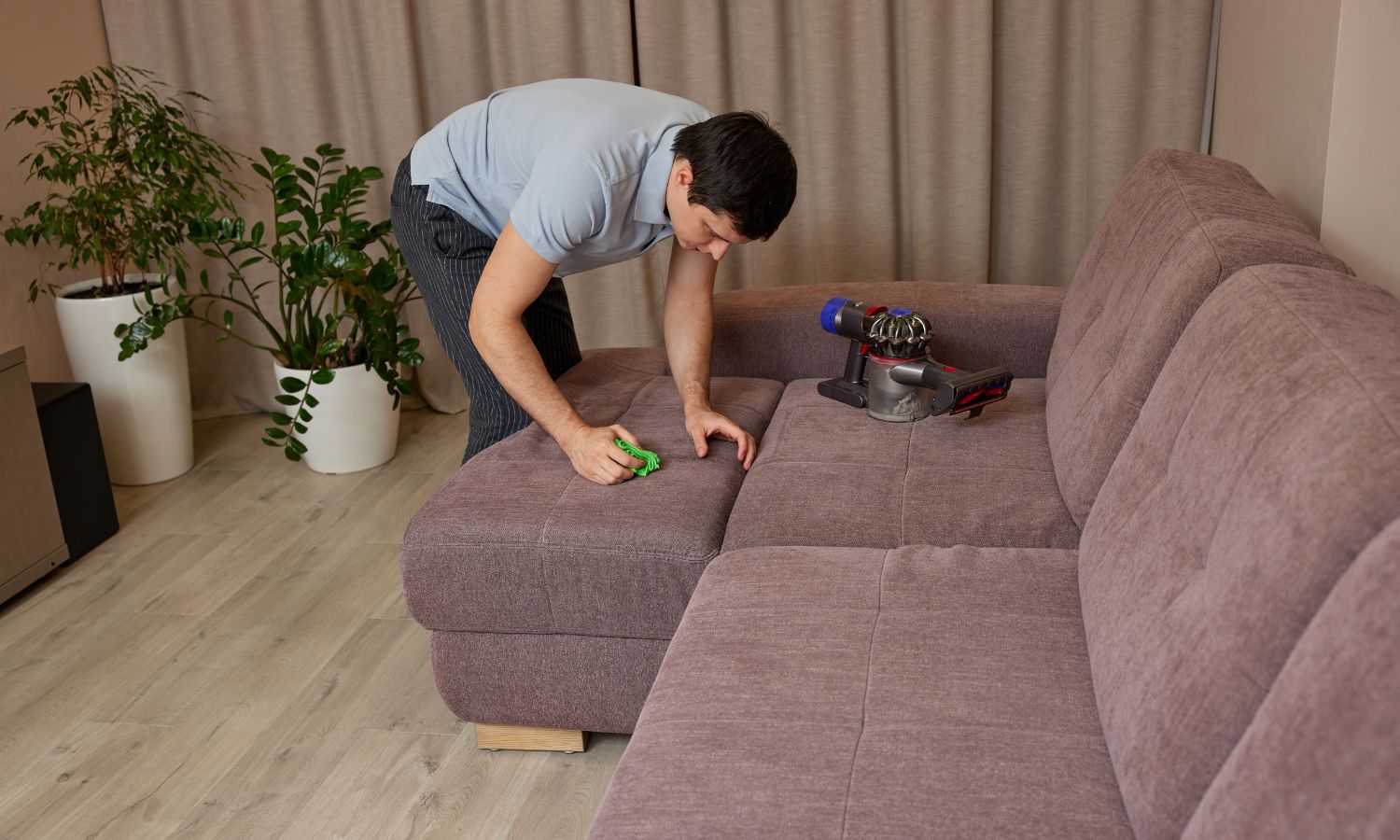
Trying to save a few dollars by cleaning your own couch makes total sense, and most people would do the same thing in your position. Here is the part nobody tells you upfront, though: DIY Upholstery Cleaning Often Causes More Damage than the stain you were originally trying to remove. We promise that by the end of this article, you will know which DIY habits quietly ruin fabric and what to do instead. We will cover the most common mistakes, why they happen so easily, what the damage looks like once it sets in, and when it makes sense to call a professional instead.
Why Rental Machines and Store-Bought Cleaners Fall Short
Grocery store upholstery cleaners and rented carpet machines are built for convenience, not precision. Most spray more liquid than they extract, so moisture remains in the cushions long after the surface looks dry.
That single design flaw is behind a huge share of the damage homeowners see afterward, and it is a big reason DIY Upholstery Cleaning Often Causes More Damage, even when someone follows the label instructions exactly.
Common DIY Mistakes That Quietly Damage Fabric
A few habits recur in homes across the city, and almost none of them feel risky in the moment.
- Skipping a spot test and applying cleaner directly to a visible area
- Scrubbing hard at a stain instead of blotting, which pushes it deeper into the fibers
- Mixing homemade solutions like vinegar, baking soda, and dish soap on delicate materials
- Using a hair dryer or heat gun to speed up drying, which can shrink or warp certain fabrics
- Oversaturating a single spot while trying to fully remove a tough stain
Any one of these can leave a fabric looking worse than before you started, and several together can cause damage that is difficult to reverse.
The Hidden Costs That Show Up Later
The real problem with DIY damage is that it rarely shows up immediately. A cushion might feel a little stiff, or a patch of fabric might look slightly duller, and it is easy to assume it will settle over time.
Here is what tends to happen instead:
- Mold or mildew is developing inside cushions that never fully dried
- Permanent water rings or discoloration on delicate fabrics
- Fiber breakdown that shortens the life of an otherwise solid piece of furniture
- Lingering odor from the cleaning solution trapped deep inside the padding
Our earlier post on how to soften sofa fabric after cleaning covers this exact pattern, where stiff or crunchy fabric almost always traces back to leftover residue or too much moisture.
What Professional Cleaning Does Differently
A trained technician is not just using stronger equipment; they are following a completely different process from the start.
- Testing the fabric for colorfastness before any product touches it
- Choosing pressure, temperature, and solution based on that specific material
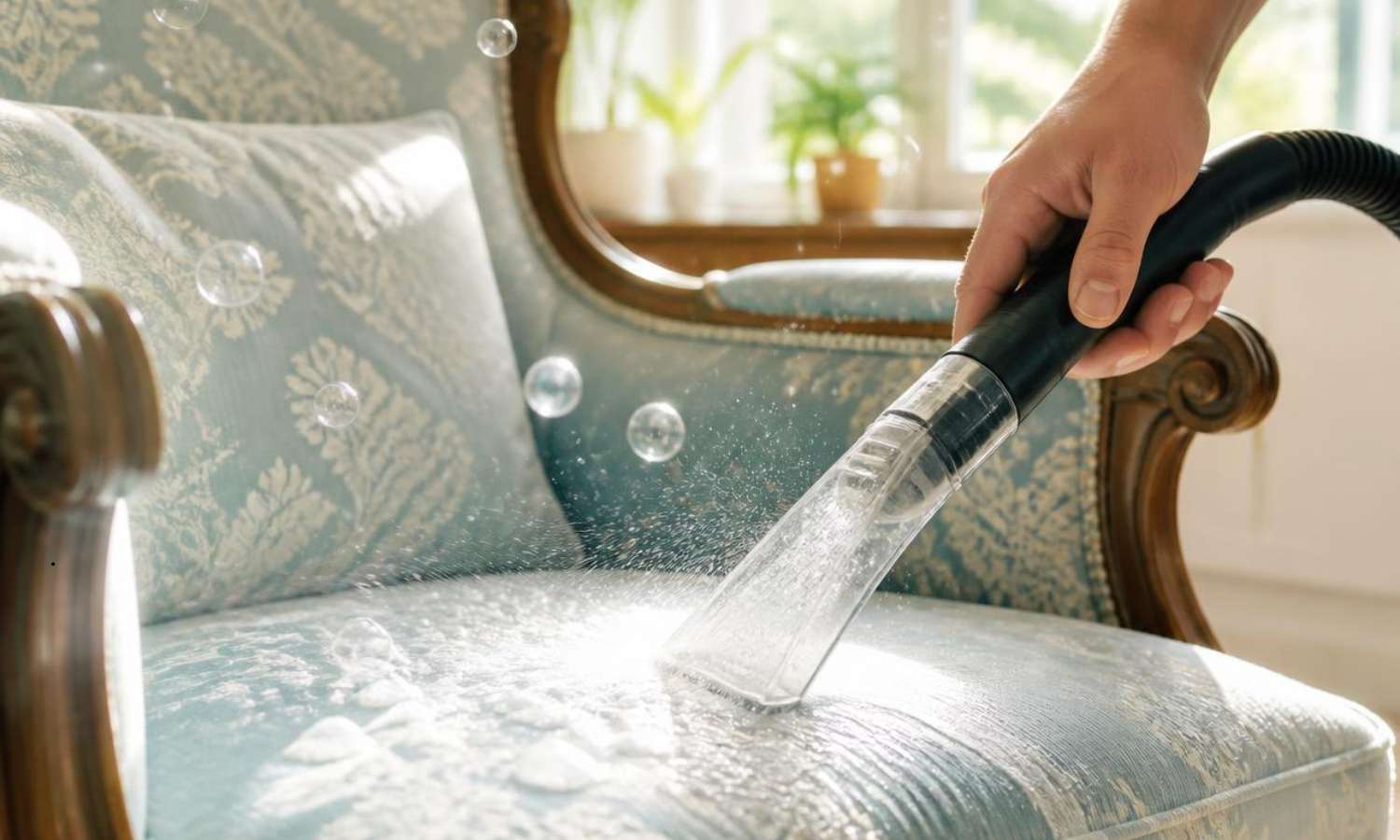
- Using commercial-grade vapor steam extraction that pulls moisture back out instead of leaving it behind
- Inspecting the finished result with you present before calling the job done
This is the same process used in our upholstery cleaning service, and it applies just as carefully to mattress cleaning, since mattress fabric tends to trap moisture even more easily than sofa cushions.
Signs Your Furniture Already Needs Professional Help
If a DIY attempt has already happened and something feels off, these signs usually mean it is time to bring in a professional rather than trying again.
- Fabric that still feels damp a full day or more after cleaning
- A musty smell that was not there before the cleaning attempt
- Discoloration or a faded patch where the cleaner was applied
- Stiff, crunchy texture that brushing does not fix
If you are unsure what a professional visit even costs, our post on how much it costs to clean a sofa professionally breaks that down in plain terms.
Why This Matters Even More in NYC Apartments
Smaller apartments often mean less airflow, which makes the overwetting problem worse than in a house with open windows on every side. Fabric that stays damp for an extra day in a poorly ventilated Manhattan studio is much more likely to develop mildew. That is one more reason DIY Upholstery Cleaning Often Causes More Damage, specifically in dense city housing, where drying conditions are rarely ideal.
Vapor Cleaning Pros serves homes across Manhattan, Brooklyn, Queens, the Bronx, and Staten Island, seven days a week from 6 a.m. to 6 p.m., with equipment built to extract moisture properly the first time.
The Bottom Line
DIY Upholstery Cleaning Often Causes More Damage than most homeowners expect, mostly because the tools sold for home use are not built to fully extract what they put into the fabric. A little patience and the right equipment make the difference between a couch that looks refreshed and one that ends up worse than before. If your upholstery already feels stiff, damp, or discolored after a DIY attempt, get a quote or call 718-673-8218 and let a trained technician take it from here.
Frequently Asked Questions
Why does DIY upholstery cleaning sometimes make fabric worse?
Most rental machines and store-bought cleaners spray more moisture than they remove, which leaves residue and dampness trapped inside the cushions long after the surface appears dry.
Can scrubbing a stain make it worse?
Yes. Scrubbing tends to push the stain deeper into the fibers rather than lifting it out, which is why blotting is almost always the safer approach.
Is it safe to mix vinegar, baking soda, and dish soap for upholstery?
Homemade mixes can be too harsh for delicate fabrics like silk, velvet, or wool, and they often leave behind residue that attracts more dirt over time.
How do I know if my couch needs professional cleaning after a DIY attempt?
Watch for fabric that stays damp for more than a day, a musty smell, discoloration, or a stiff, crunchy texture that does not improve after brushing.
Is professional upholstery cleaning worth it compared to doing it yourself?
For most fabrics, yes. Professional equipment extracts moisture more completely and uses fabric-specific settings, which lowers the risk of mold, shrinkage, or permanent staining.